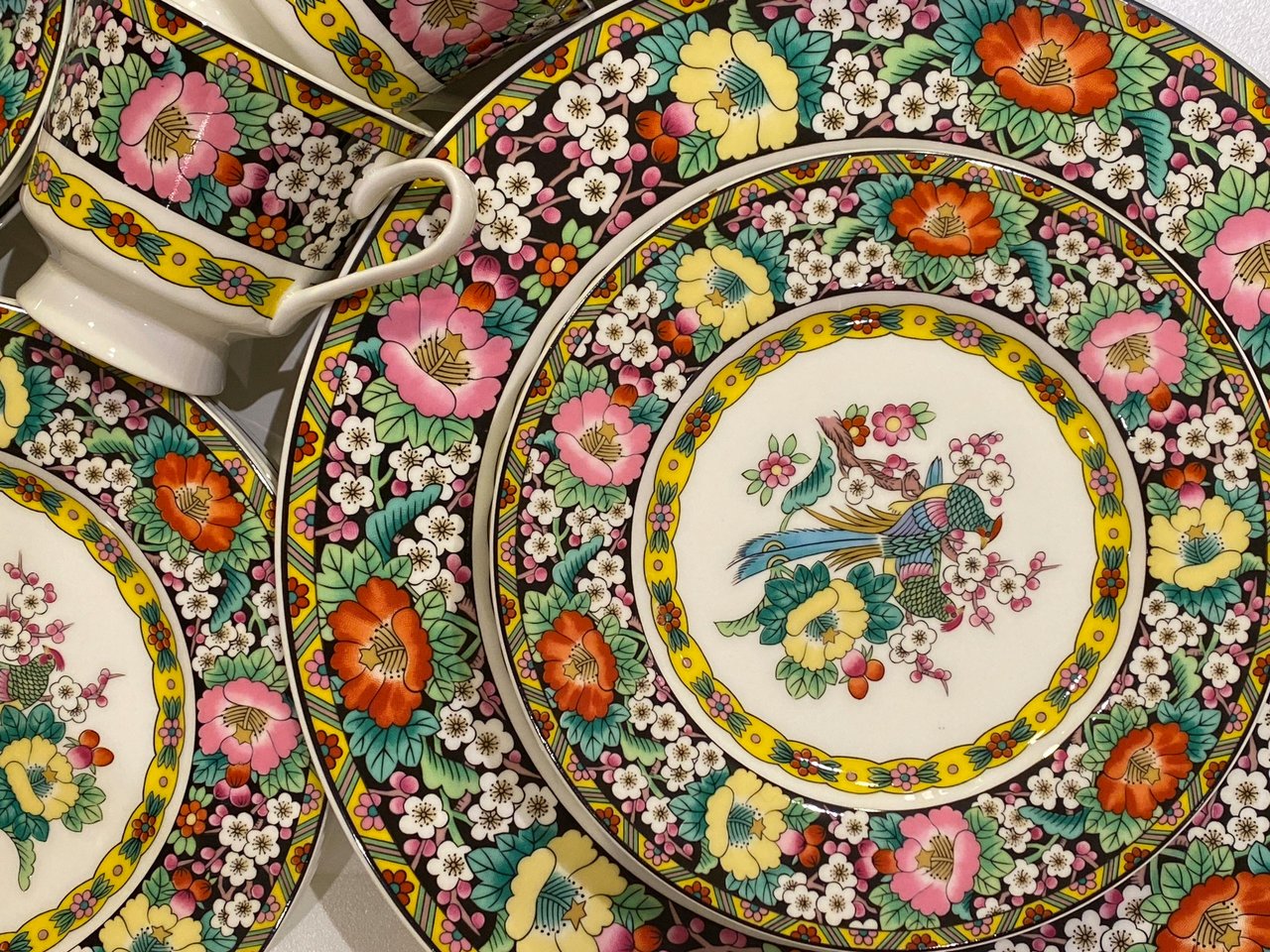
When I walk through an estate sale, I am often struck by the same quiet little tragedy: the China no one wants, the Silver no one wants, the Crystal no one wants. Entire cabinets filled with beautiful things, lovingly collected and carefully preserved, and now regarded as burdensome because they seem too formal, too fragile, or simply too much trouble for modern life. I watch as younger buyers often pass over these pieces entirely, even when they admire them, because they imagine the care involved outweighs the pleasure.
And every time, I think the same thing: Why not just use them?
Why not eat your breakfast on your grandmother’s China? Why not pour water into the crystal glasses on a Wednesday? Why not let the silver appear on an ordinary evening, with takeout on the table and no holiday in sight?
We have inherited a strange idea that beautiful things must wait for the right moment. That they should be kept behind cabinet doors. That elegance is something to be brought out only a few times a year, under the supervision of a proper occasion. But I have never believed that. Or rather, I believe the opposite. Every day is the occasion for a life well lived. Every dinner is a dinner party if you decide it is. Every life, if you are lucky enough to be living it fully, deserves your best. Life is too fleeting and too short to reserve the good things for two or three days a year.
There is something else, too, and it matters even more. These objects are not just decorative possessions. They are memory made tangible. They are time you can hold in your hands. A plate from your aunt’s cabinet is a continuation, and evidence that love has a material life. The people we think we have “lost” aren’t detached from us at all. They remain part of our DNA, and part of the tapestry of who we are.
So when you use the things that belonged to people you loved, you are repurposing an object while letting memory move out of storage and back into daily life. The extraordinary becomes ordinary, yes — but in that transformation it also becomes intimate. It stops performing as heritage and starts living as companionship.
After my father passed away in 2006, people would ask if I missed him. And my answer is always the same: I miss being able to talk to him, certainly, but I don’t feel my father has ever truly gone away. How could he? He was part of me, and he is still present in how I move through the world, in what I carry forward.
We talk so much about inheritance as ownership. Who gets what. What something is worth. Whether anyone wants it. But perhaps the real question is whether you are willing to let beauty and memory sit beside you at the table — not whether the China matches your kitchen. In this way, the point is not to preserve these things in perfect condition forever, but to let them continue doing what they were meant to do: serve, accompany, witness, delight.
And yes, something may chip. Something may crack. A silver spoon may tarnish. A plate may not survive the dishwasher. But honestly? So what. At least it was used. At least it participated in life instead of being exiled from it. I think there is a kind of freedom in that.
To stop treating beauty as too precious for everyday life is, in its own way, a form of abundance. It is a refusal to postpone joy. It is a rejection of the idea that meaning only appears under special lighting, on a special date, with a special menu. Sometimes meaning is just coffee in a lovely cup on a quiet morning. Sometimes richness is not financial at all, but emotional: to feel surrounded by the people who formed you, even when they are no longer here to sit across from you.
So yes, use your grandmother’s dishes. Use the crystal. Use the silver. Open the cabinet. Empty the butler’s pantry. Take the beautiful things down from their little pedestals and let them enter the stream of ordinary life, where they belong.
Because the truth is, ordinary life is the special occasion. And the most elegant homes are not the ones that save beauty for later. They are the ones that live with it now.
Happily Ever Always.™