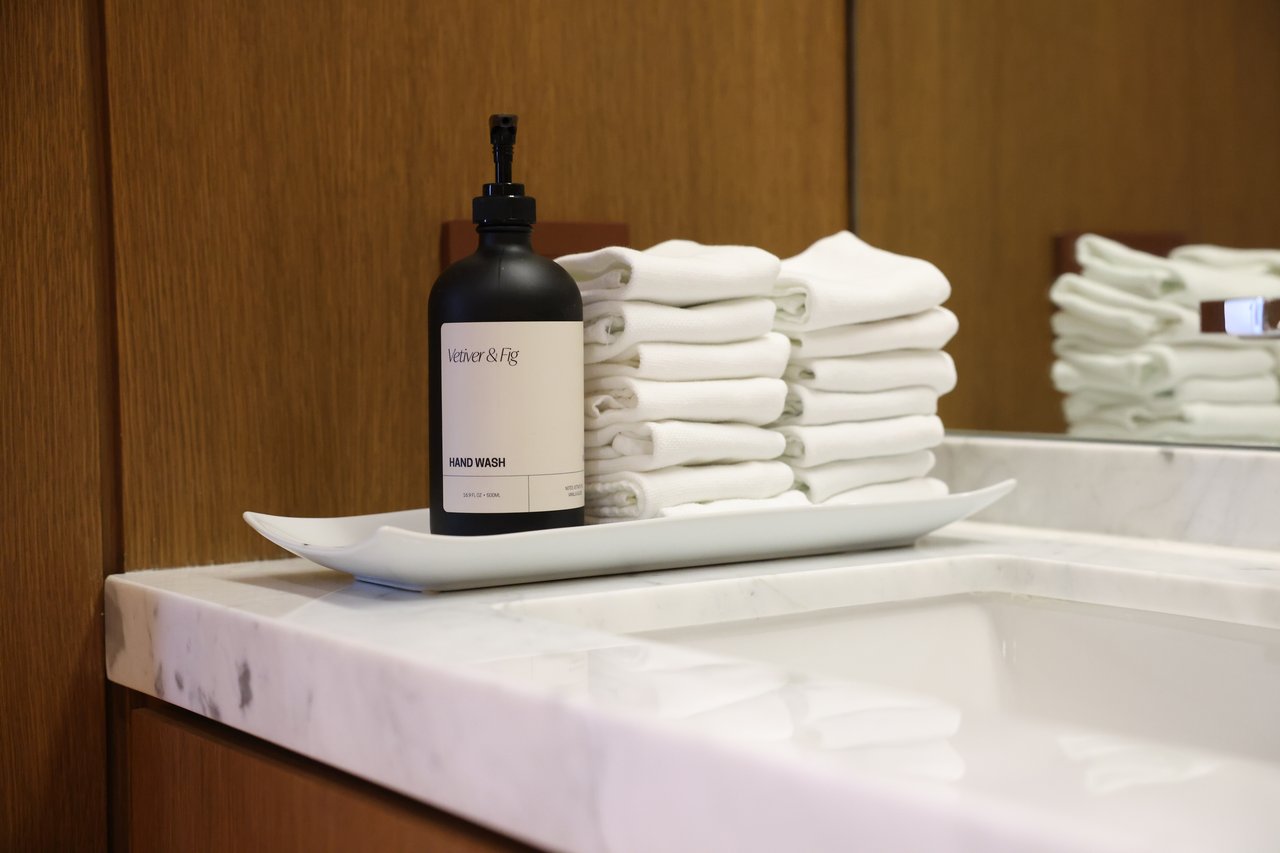
There are small white cloth towels stacked in my powder room. They are folded into neat little squares, ironed and ready for anyone who comes into my home. They aren't there because paper guest towels won't work. They would. They aren't there because a shared hand towel would be impossible. It would not. They are there because I want my guests to feel that something has been prepared especially for them.
That idea began years ago, when I stayed at a hotel where the lobby bathroom had individual cloth towels instead of paper napkins or one communal towel hanging beside the sink. I remember noticing the difference immediately. It felt gracious, thoughtful, and slightly formal in the best possible way.
Each person had a fresh towel of their own. I thought: I want to do that at home.
A Small Lesson in Luxury
Years later, Stephen and I were staying at La Mamounia in Marrakesh. La Mamounia is one of those places where every detail seems to have been considered. The architecture, the gardens, the scent, the service, the way objects are placed — everything contributes to the feeling that you have entered a world with its own rhythm.
And there, once again, were the white guest towels. They were simple. There was nothing overly decorative about them. But they were substantial and beautifully made, and the gesture behind them felt unmistakable. Someone had anticipated the guest’s arrival. Someone had considered the experience of washing your hands.
So I asked the general manager if I could buy some. I am sure it was not the question he expected, but he agreed. I brought the towels home, and they have been part of our powder room ever since.
They are laundered every week. Our housekeeper irons them, folds them into small squares, and stacks them beside the sink. Underneath, hidden inside the cabinet, is a basket for the used towels. Before we have people over, I place one or two used towels in the basket. That may seem like an unnecessary detail, but it gives people a clue. They see where the towel belongs without having to ask. Hospitality, I think, often means answering a question before a guest has to form it.
The Difference Between a Bathroom and a Powder Room
I have always felt there is a distinction between a bathroom and a powder room. A bathroom is practical. It is where daily life happens. Toothbrushes, medicine cabinets, towels, showers, routines. It is personal and functional and often a little less composed because it has work to do.
A powder room is different. It belongs partly to the guest. It is one of the few rooms in a home created almost entirely for someone passing through. That gives it an opportunity to be a little more formal, a little more elegant, and a little more considered. The name itself suggests another time. A room where one paused, refreshed, and returned to the gathering. There is something gently old-fashioned about it, and I mean that as a compliment.
We live very quickly now. Convenience has become one of our highest values. And I appreciate convenience. But sometimes convenience strips away the small gestures that make an experience memorable. The cloth towel asks us to slow down for a second. It feels different in the hand. It has weight and texture. It turns a practical act into a tiny ritual. Then it is placed in the basket, carried away, washed, ironed, folded, and returned for someone else. It participates in a cycle of care.
For the Guests Who Enter My Home
Anyone who comes into my home is special to me, although that doesn’t mean every visit has to become a grand performance. Hospitality isn’t about showing off. In fact, the most genuine hospitality often feels effortless because the effort has happened before the guest arrived. The flowers are fresh. The room is comfortable. The glass is placed where someone will need it. The towel is waiting beside the sink.
These details say: I thought about you.
I could put out a beautiful tray of paper guest towels, and many people do. There is nothing wrong with that. But for me, the cloth cotton towels carry a different feeling. They create a small moment of individuality. No one has used that towel before you. It is yours for those few seconds. it is gathered, cared for, and prepared again. I find that incredibly elegant because it transforms an ordinary necessity into an act of welcome.
Bringing the Unusual Into Everyday Life
I am always interested in how we bring the unique or unusual into our daily lives. We often reserve beautiful things for special occasions. We save the China, protect the silver, leave the candle unlit, or decide that a certain gesture is too formal for an ordinary day.
But an ordinary day is our life. Why should the things that bring us pleasure or make others feel cared for remain hidden until some undefined important moment arrives? The guest towels from Marrakesh don’t wait for a holiday. They are part of the room. They are there for dinner guests, friends stopping by, family members, and anyone else who enters our home.
I don’t believe luxury has to be grand. It can live in a one-bedroom apartment as easily as in a large house. It can be a flower beside the bed, a beautiful soap by the sink, a cloth napkin at breakfast, or a fresh towel folded for someone you care about. Luxury, to me, is the feeling that an ordinary moment has received more attention than it strictly required.
The Gesture That Remains
Most guests probably do not leave our home thinking primarily about the towel they used in the powder room. They shouldn’t. That’s not the point. The point is, however, the feeling created by a collection of details. The sense that our home was ready for them. That their comfort mattered. That nothing was extravagant, but something was different.
This is what hospitality does at its best. It creates an atmosphere in which people feel comfortable, seen, and expected. It does not demand attention. It quietly gives attention away.
The towels from Marrakesh remind me of that every time I see them stacked beside the sink. They began as a detail I noticed in another place. I carried the idea home because it made me feel cared for, and I wanted to offer that same feeling to others. That is how beautiful rituals begin. Someone does something thoughtful. Someone else notices. And the gesture continues.
Happily Ever Always™.