There are certain dishes I come back to when the season begins to change. The light shifts. The air gets a little cooler. The table starts to feel ready for something deeper, warmer, more fragrant. Summer food has its own ease, of course, but fall asks for something else. Something with richness. Something with layers. Something that fills the kitchen before it ever reaches the plate.
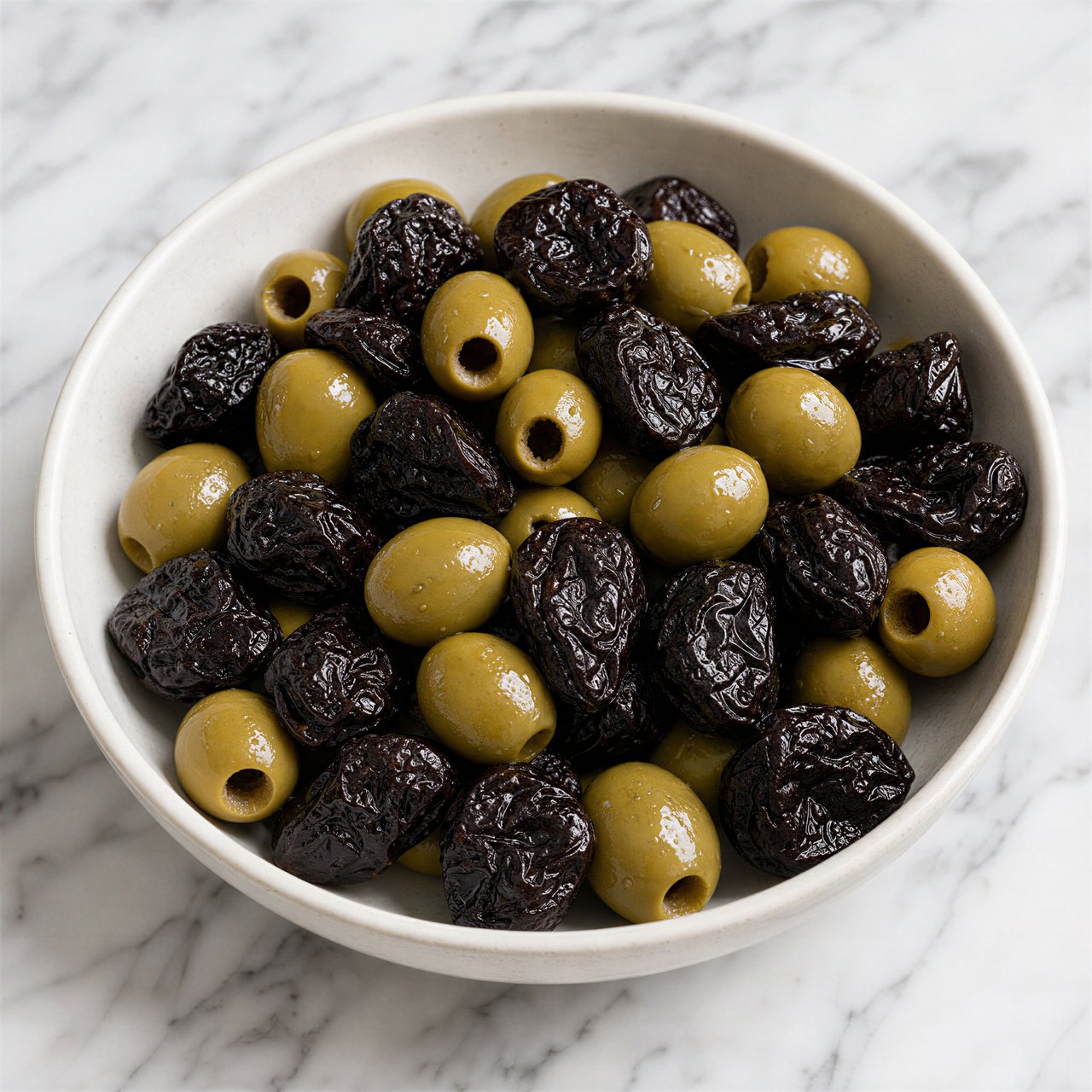
For me, one of these dishes is Chicken Marbella. I love the idea of it — the sweet and savory combination, the olives and prunes, the way the flavors deepen as they sit together. But of course, I do it my way. I began with The Silver Palate Cookbook recipe that gave me a structure. Then, over time, I began to add my own hand.
The Dish I Come Back To
I start with chicken thighs. I have them deboned at Whole Foods, but I keep the skin on. That matters to me. The deboning makes the dish easier to eat, but the skin acts as a blanket to hold the treats underneath whilst keeping the chicken beautiful, flavorful, and crisp in the way chicken should be when it comes out of the oven.
Then comes the marinade. I like to give it time — a full twenty-four to forty-eight hours — because flavor needs a chance to move in. A rushed marinade is never the same. The chicken needs to sit with the olives, the prunes, the seasonings, the sharpness, the sweetness, the salt, the richness. It all must become acquainted. This where the dish begins — not in the oven, but in the waiting.
Under the Skin
My twist to this storied recipe is that I tuck green olives and prunes under the skin.
I love that little surprise. The olives bring brine, salt, and brightness. The prunes bring sweetness, depth, and softness. Together, they create that marvelous contrast that makes Chicken Marbella so memorable in the first place. But placing them under the skin makes the flavors feel more integrated. They are not just around the chicken; they are part of it. Hidden, but present. Like so many good things, they do their work from underneath.
When the chicken roasts, those flavors settle into the meat. The skin becomes golden. The sweet and savory notes begin to talk to one another. The whole dish starts to smell like fall to me. Comforting, but not heavy. Elegant, but not fussy. Familiar, but still a little surprising.
A Bed of Lentils
I serve the chicken on a bed of green lentils. It may not be the traditional way, but I love what lentils bring to the plate. They are earthy, grounding, and substantial without feeling showy. They give the chicken somewhere to land.
I cook them with carrot, celery, leeks, tomato paste, red wine vinegar, chicken stock and whatever else feels right in the moment. The lentils absorb flavor beautifully. They are modest, but they know how to carry a dish.
Not every ingredient has to be dramatic. Some ingredients create the foundation. They provide the place where everything else can happen.
The Side That Makes It Sing
Alongside the Chicken Marbella, I like to make roasted eggplant.
I roast it in the oven, then chop it with roasted peppers, onions, and little dill pickles. The result is rich, smoky, bright, and a little unexpected. It cuts through the sweetness of the prunes and the richness of the chicken.
This contrast matters. A meal, like a room, needs balance. Too much richness becomes dull. Too much sharpness becomes tiring. But when the elements are right — sweet, salty, earthy, acidic, soft, crisp — everything begins to lift. Not just something good, but something complete.
Making It Mine
I always think recipes are a little like houses. You can admire the original plan. You can respect the architecture. But at some point, if you live with it long enough, you begin to understand how it wants to work for you.
You move a chair.
You add a lamp.
You change the flowers.
You bring in something unexpected.
You make it yours.
This is what happened with this dish. Chicken Marbella gave me the idea. But the deboned thighs, the skin left on, the olives and prunes tucked underneath, the bed of lentils, the roasted eggplant with peppers, onions, and pickles — those are the details that make it mine. They are the little choices that turn a recipe into a ritual. And I think that is one of the great joys of cooking: repetition with personality.
You come back to the same dish, but you are never quite the same cook. The season is different. The guests are different. The table is different. Your mood is different. So, the dish changes, too.
A Fall Dinner
This is the kind of dinner I love to serve in autumn. It feels generous. It fills the house with fragrance. It has enough complexity to feel special, but enough comfort to make people relax. It is food that wants a good table, good conversation, and maybe a little candlelight. And I like dishes that give people something to remember. Not because they are complicated, but because they feel cared for. You can taste when something has been thought about. You can taste when it has been given time. You can taste when the cook has added a little bit of himself to the recipe.
That, to me, is the difference between feeding people and hosting them.
Happily Ever Always™.